
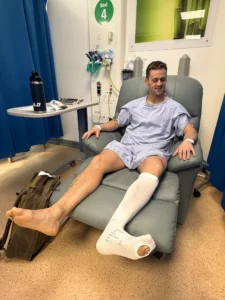
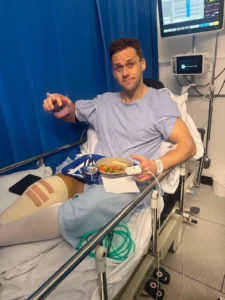
There’s a difference between discomfort and something not being right. For a long time, I told myself this was just discomfort.
But deep down, I knew better.
When It Started
The knee pain didn’t arrive overnight.
It crept in gradually, something I could manage, something I could work around. But as the months went on, it became harder to ignore.
Simple things started to change:
- Mornings became stiff and uncomfortable
- Walking downstairs increased the pain
- Squatting below parallel didn’t feel right
- Olympic lifts caused swelling
- Jumping felt manageable in the moment… but the aftermath told a different story
At first, I did what I’ve always done………..I pushed on.
The Military Mindset
After over 20 years in the Royal Navy, you develop a certain mindset:
Get on with it. Manage it. Don’t complain. That approach has its place, it builds resilience, discipline, and robustness………..But this wasn’t one of those situations.
The Moment That Changed Everything
The turning point didn’t happen in the gym, It happened playing with my kids. Kicking a ball around. Changing direction. Chasing my 4-year-old.
Nothing extreme.
But the next day?
I could barely walk.
The swelling was worse than it had ever been. The pain had significantly increased. And for the first time, it made me stop and think.
Not as a coach.
Not as a PTI.
But as a dad.
A Shift in Perspective
My youngest son is 4.
I’m 39.
There are years of playing, running, and being active ahead, but that time is not unlimited. I didn’t want to become the dad who says:
“Not today — my knee’s bad.”
Because I’ve already seen how quickly that window changes. My oldest son is 16 now, and it’s me asking him to train, to move, to spend time being active together.
That shift hit hard.
Facing Reality
With a background in strength and conditioning, sport, and nearly two decades as a Physical Training Instructor, movement has always been part of who I am. The idea of not being able to do what I want, when I want, wasn’t just frustrating, it was confronting.
So, reluctantly…
I went to get it checked.
The Diagnosis
After:
- Initial assessments
- Cortisone injections
- Ultrasounds
I was finally referred for an MRI.
The result:
An osteochondral injury in my right knee.
In simple terms, damage to the cartilage and underlying bone, including two defects in the meniscus.
It explained everything:
- The pain
- The swelling
- The instability
And more importantly — it confirmed this wasn’t something I could just “push through.”
The Plan Moving Forward
The recommended solution was cartilage transplantation, a two-stage process:
Stage 1: Keyhole surgery to harvest cartilage cells.
These cells are then sent to a lab in Germany, where they are cultured and multiplied.
Stage 2 (8 weeks later): Open knee surgery to implant those regenerated cells back into the damaged area.
A procedure known as autologous chondrocyte implantation.
What No One Tells You
At this stage, everything still felt clinical. Structured. Manageable.
What wasn’t fully explained?
- The level of post-operative pain
- The restrictions on movement
- The loss of independence
- The mental challenge that comes with it
That part… you only understand when you go through it………
The Beginning of a Different Journey
I knew how to train.
I knew how to structure rehab.
I understood nutrition for recovery.
But what I hadn’t fully experienced before…
Was the mindset required when you’re the one injured.
When your identity shifts.
When progress feels slow.
When control is taken away.
That’s where this journey truly began.
Why I’m Sharing This
This series isn’t just about surgery or rehab.
It’s about:
- Mindset under pressure
- Setting realistic goals
- Focusing on what you can do
- Building yourself back — physically and mentally
If you’re going through injury, or facing limitations right now…
You’re not alone.
What’s Next
In the next post, I’ll break down:
- The decision-making process behind surger
- What Stage 1 actually involved
And what the first reality check felt like
Follow along — this is just the start.